
Validate before you build
Frameworks to test demand, interview customers, and size your market — without a research budget or a PhD.
42% of startups fail because there was no market need. Market Investigation gives founders the research frameworks, practical guides, and free AI tools to validate demand before you build — not after.
Market research isn’t just for big companies with big budgets. These are the tools and frameworks that let founders move with confidence.
Frameworks to test demand, interview customers, and size your market — without a research budget or a PhD.
From stock screeners to sentiment analysis — tools that give you institutional-grade insight without the institutional price tag.
Every article is written for founders making real decisions — not academics writing for other academics.
Learn to read markets the way experienced analysts do — so your next pitch, hire, and product decision is grounded in evidence.
Ready to research your market properly?
Start with our free guidesAuthor: Takarudana Mapendembe

Market research, consumer behaviour analysis, and data-driven trading strategies are the three pillars that separate profitable traders from people who are currently explaining to their spouses why the mortgage money is gone. I’m not trying to scare you. Okay, maybe a little. But somebody has to tell you the truth, and it might as well…
Author: Takarudana Mapendembe
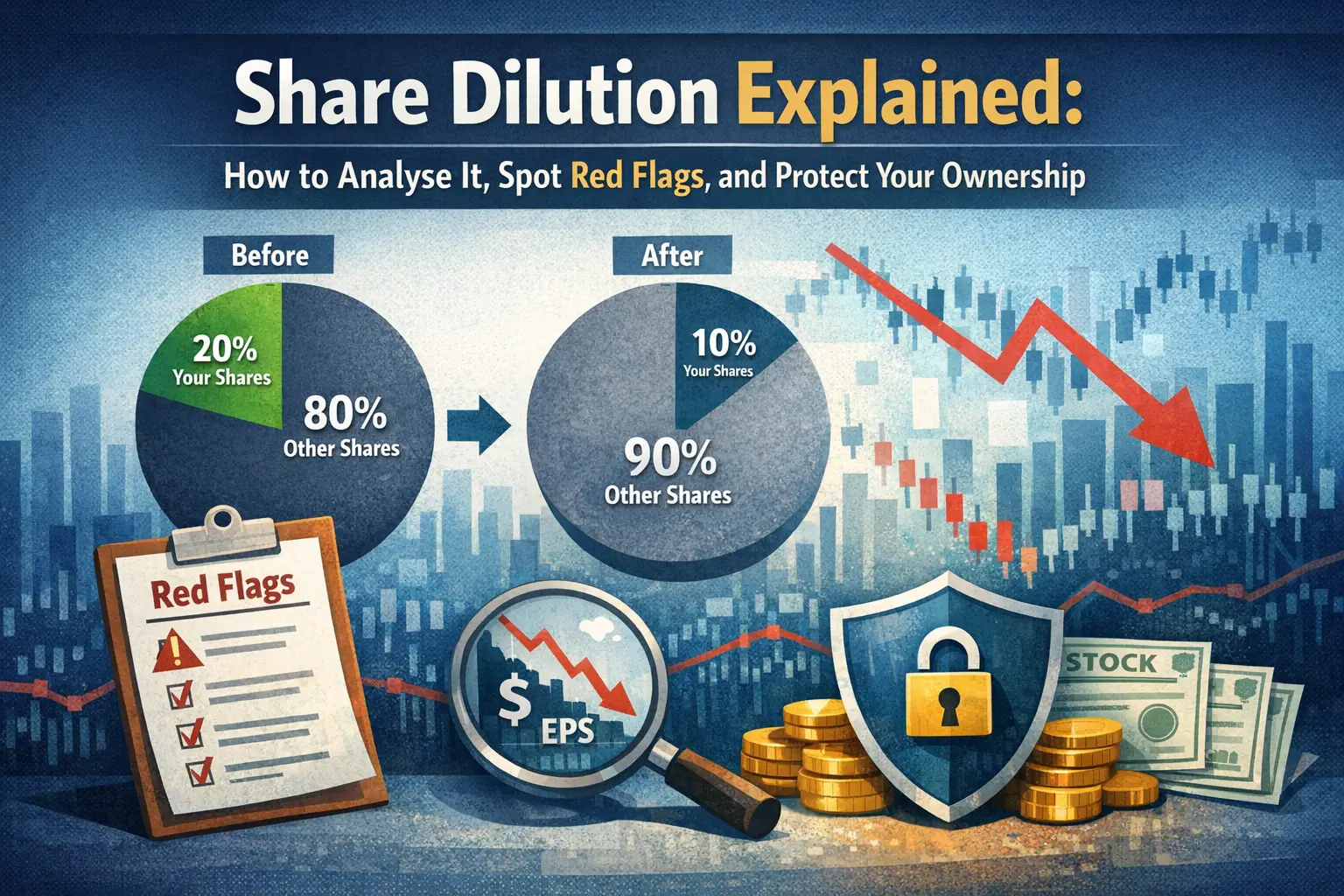
Share dilution, earnings per share (EPS) erosion, and diluted share count are three of the most critical concepts every investor must master — and if you’ve ever watched your portfolio shrink overnight while a company cheerfully announced it was “raising capital for growth,” then congratulations, you’ve already been introduced to dilution. It didn’t shake your…
Author: Takarudana Mapendembe
Capital expenditure (CapEx) is the money companies spend acquiring or maintaining long-term physical assets, recorded on the cash flow statement and depreciated over time rather than expensed immediately. Mastering how to calculate, benchmark, and evaluate CapEx efficiency is essential for understanding whether a business is creating or destroying shareholder value. 📝 TL;DR — Quick Takeaways…
Author: Takarudana Mapendembe
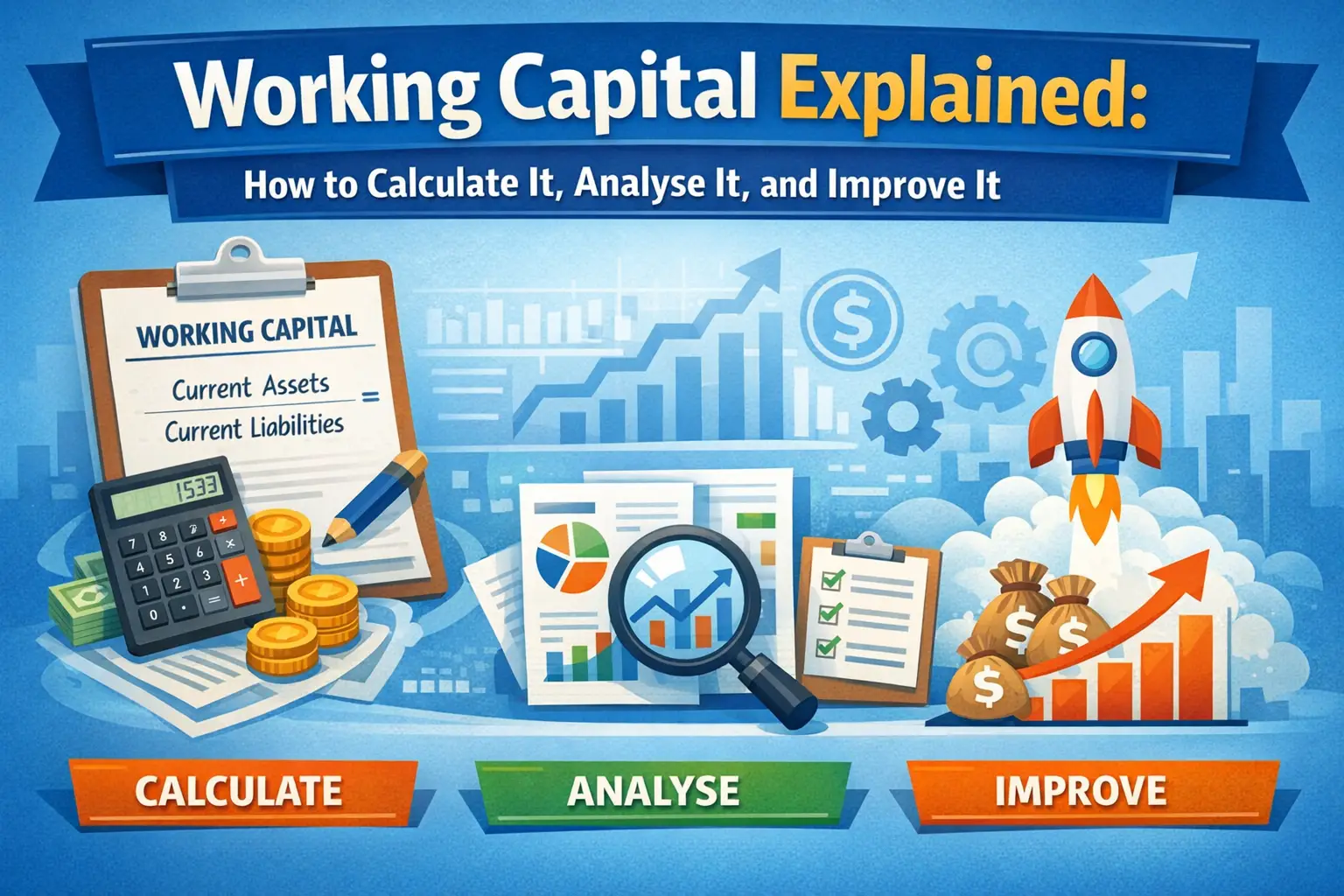
Working capital management, cash flow analysis, and current ratio optimisation are not just things that accountants mutter about over lukewarm coffee. They are the oxygen your business breathes. Right now, somewhere in the world, a perfectly profitable company is filing for bankruptcy because it ran out of working capital. Profitable. Bankrupt. At the same time.…
Author: Takarudana Mapendembe
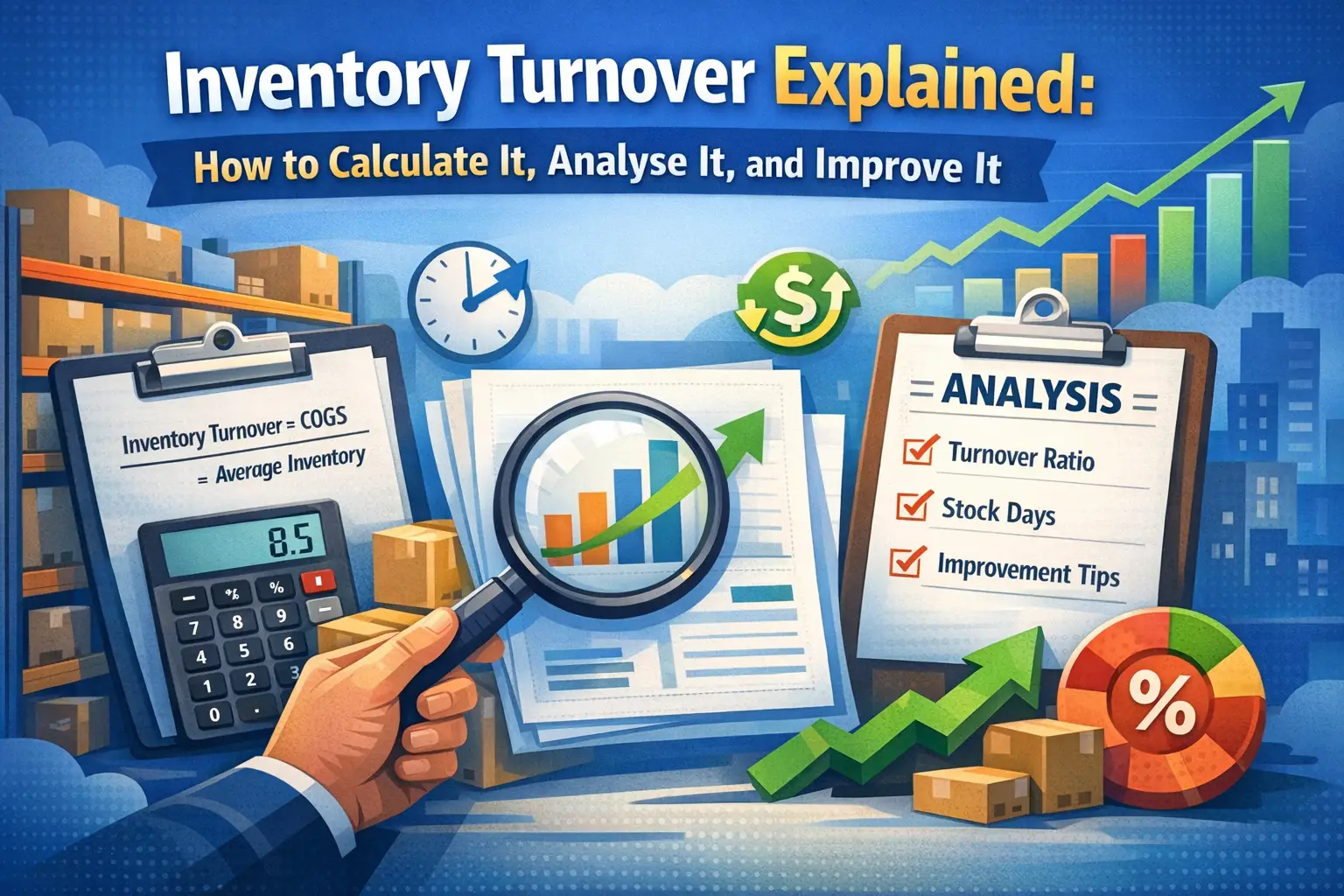
Inventory turnover measures how many times you sell and replace your entire stock in a given period, calculated by dividing your Cost of Goods Sold by your average inventory. To analyse it, compare your ratio against industry benchmarks and segment by category to find what’s dragging it down; to improve it, prioritise fast-moving stock, clear…
Author: Takarudana Mapendembe
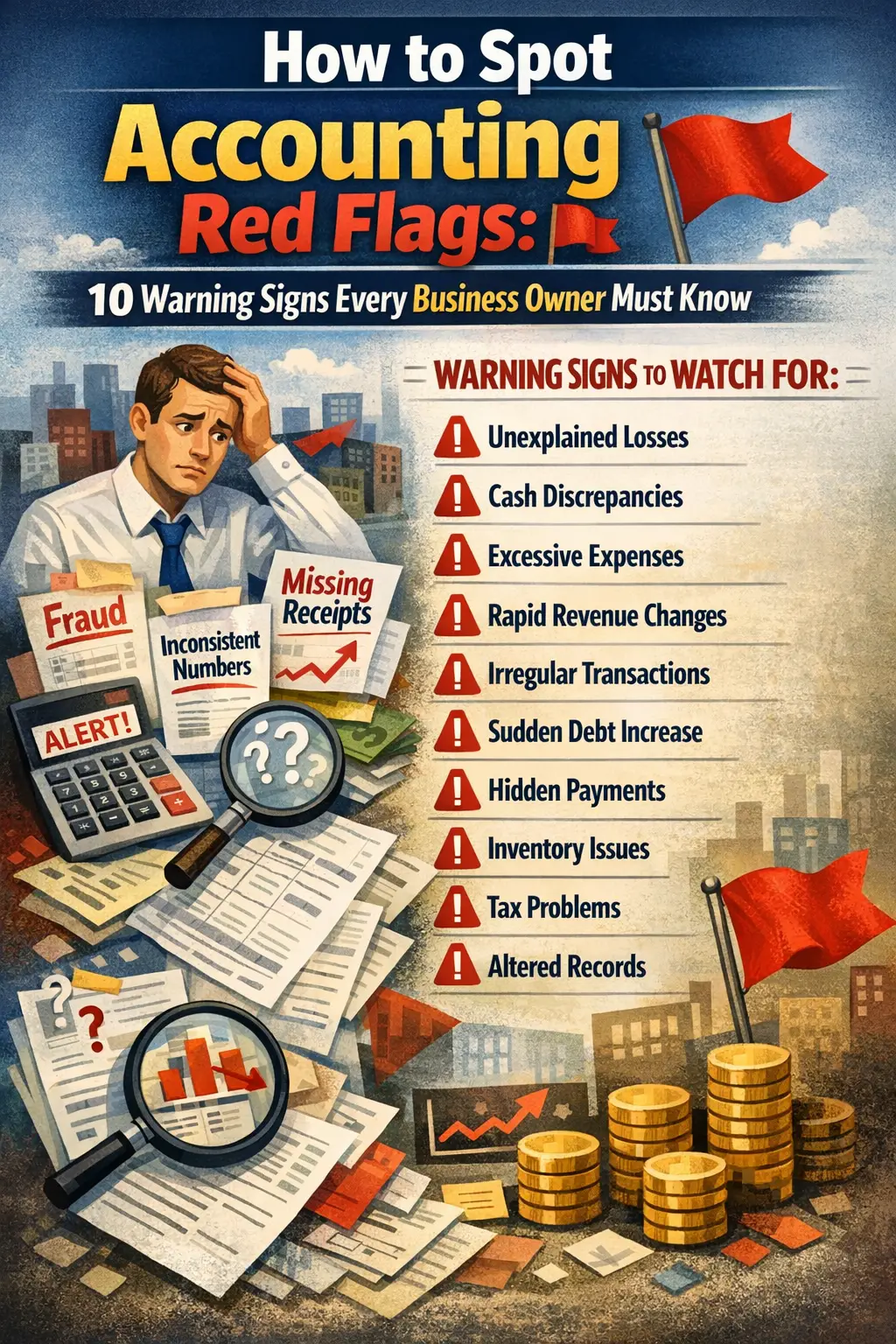
Accounting red flags include revenue growing without matching cash flow, bloated accounts receivable, unexplained inventory, round-number transactions, and suspiciously smooth earnings. The remaining five warning signs every business owner must know are frequent auditor changes, off-balance-sheet entities, concentrated financial authority, vague expense categories, and a narrative that contradicts the numbers. If your business is bleeding…

DCF (Discounted Cash Flow) valuation is the method professional investors use to calculate what a company is actually worth by projecting future cash flows and discounting them back to today’s money. This guide walks you through every step — from calculating free cash flow and WACC to terminal value — with real examples from Apple…

Analysing IPOs before investing requires a disciplined, research-backed framework covering valuation, prospectus scrutiny, competitive moats, and psychological bias — not excitement alone. This guide walks you through every stage of that process, with real academic research and case studies from Airbnb, WeWork, and Deliveroo. Analysing IPOs before investing is the single most important skill a…

Inflation attacks company earnings through six distinct channels — from input cost pressure and wage inflation to interest rate transmission and valuation compression — rewarding businesses with genuine pricing power while quietly destroying those without it. Understanding these mechanisms is the difference between navigating inflationary cycles profitably and watching your portfolio erode in real terms.…

To evaluate management quality, assess leadership across five core pillars — capital allocation discipline, communication transparency, incentive alignment, strategic clarity, and integrity — using earnings call transcripts, proxy statements, ROIC history, and SEC filings. Score each pillar from one to five, treat anything below 15 out of 25 as a serious warning, and weight management…