Category: Validate Your Idea
-
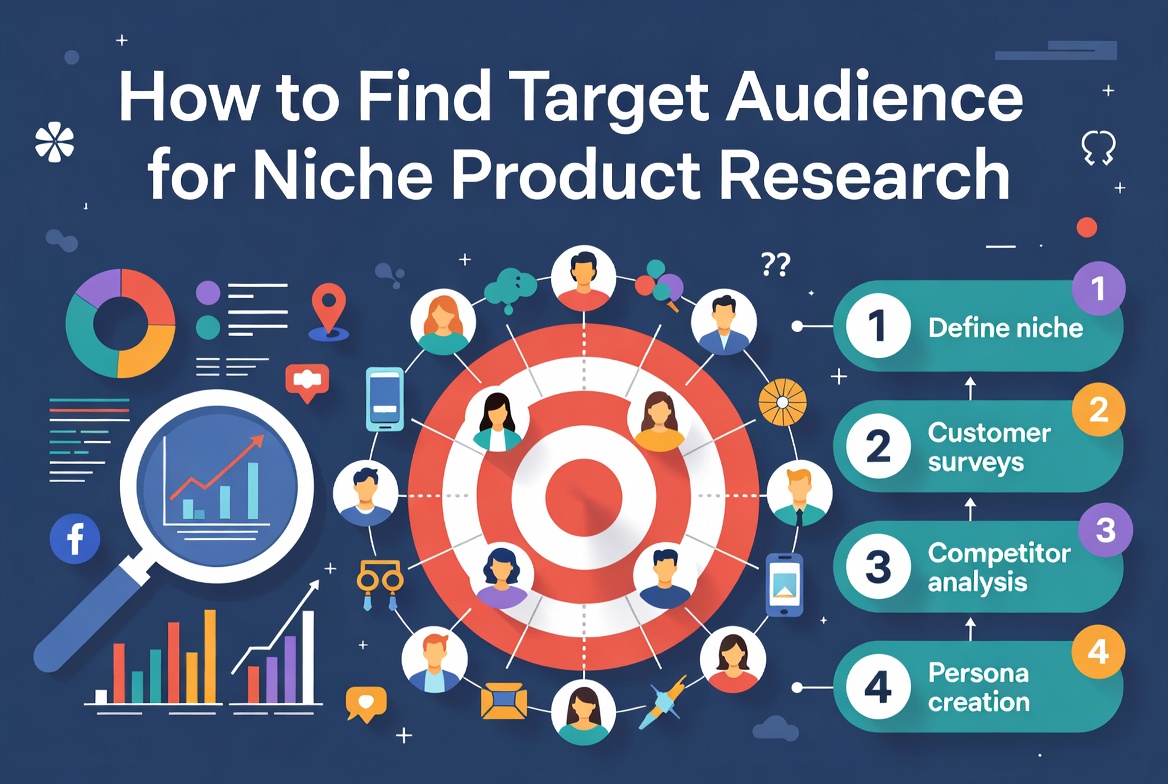
To find your target audience for niche product research, start by identifying a specific, underserved pain point, then use forums, search data, reviews, and small validation tests like crowdfunding to confirm real people already want it solved. If you want to know how to find target audience for niche product research, sit down, because I’m…
-

The best product market research tools for solo non-tech founders include Google Trends, AnswerThePublic, Typeform, SurveyMonkey, SimilarWeb, SparkToro, SEMrush, Statista, Think With Google, Perplexity AI, Gumroad, and Carrd — all requiring zero coding knowledge and ranging from completely free to under $50 per month. Together these tools cover every stage of research, from spotting market…
-

The B2B SaaS product market research questions you must ask cover six critical areas: customer pain point discovery, ideal customer profile validation, competitive intelligence, pricing and willingness-to-pay, product-market fit assessment, and retention risk identification. Ask these questions — in structured interviews, surveys, and ongoing feedback programmes — before you build, and you move from the…
-

To eliminate confirmation bias in startup market research, you must deliberately design your research to disprove your idea rather than confirm it — using falsification frameworks, designated sceptics, disconfirmation logs, and behavioural tests like fake door pages that measure what people actually do instead of what they politely say. The seven-step framework in this article…
-

If you want to stop losing money on the wrong founders, the Founder’s Interview Framework gives traders and investors a structured, seven-pillar system for evaluating startup founders before committing capital. Backed by peer-reviewed research and real-world case studies, it replaces gut instinct with a repeatable, scoreable process that reveals who a founder truly is beneath…
-

A smoke test is a fast, structured checklist you run before every build — covering your environment setup, core user paths, infrastructure connections, and quality gates — to confirm your project is fundamentally stable before committing time and resources to deeper testing. Work through each check, mark any failures as blockers, and only proceed to…
-

To validate a startup idea in 30 days, spend the first week defining your riskiest assumptions and mapping the competitive landscape, the second talking to at least 20 real target customers, the third running a live minimum viable test — a landing page, demo video, or pre-sale — and the fourth analysing your results to…
-

How to choose the right sample size for small or niche audiences (Without a Statistician) is a practical challenge many researchers, marketers, and product teams face when working with limited populations. Unlike massive consumer studies that can rely on thousands of respondents, niche audiences — such as specialized hobbyists, rare disease patients, boutique customer segments,…
-

Founder bias and leading market research questions are silently killing startups — and if you are sitting there right now absolutely convinced your product idea is the greatest thing since sliced bread, this article was written specifically, and lovingly, for you. Let me paint you a picture. You have spent six months building your startup.…
-

In fast-moving industries, market research can become outdated almost as quickly as it is collected, making timing just as important as accuracy. Understanding how long market research remains valid helps businesses identify data expiry points, avoid costly decisions based on stale insights, and stay ahead in rapidly changing markets. Let me paint you a picture.…