Validate before you build
Frameworks to test demand, interview customers, and size your market — without a research budget or a PhD.
42% of startups fail because there was no market need. Market Investigation gives founders the research frameworks, practical guides, and free AI tools to validate demand before you build — not after.
Market research isn’t just for big companies with big budgets. These are the tools and frameworks that let founders move with confidence.
Frameworks to test demand, interview customers, and size your market — without a research budget or a PhD.
From stock screeners to sentiment analysis — tools that give you institutional-grade insight without the institutional price tag.
Every article is written for founders making real decisions — not academics writing for other academics.
Learn to read markets the way experienced analysts do — so your next pitch, hire, and product decision is grounded in evidence.
Ready to research your market properly?
Start with our free guidesAuthor: Takarudana Mapendembe
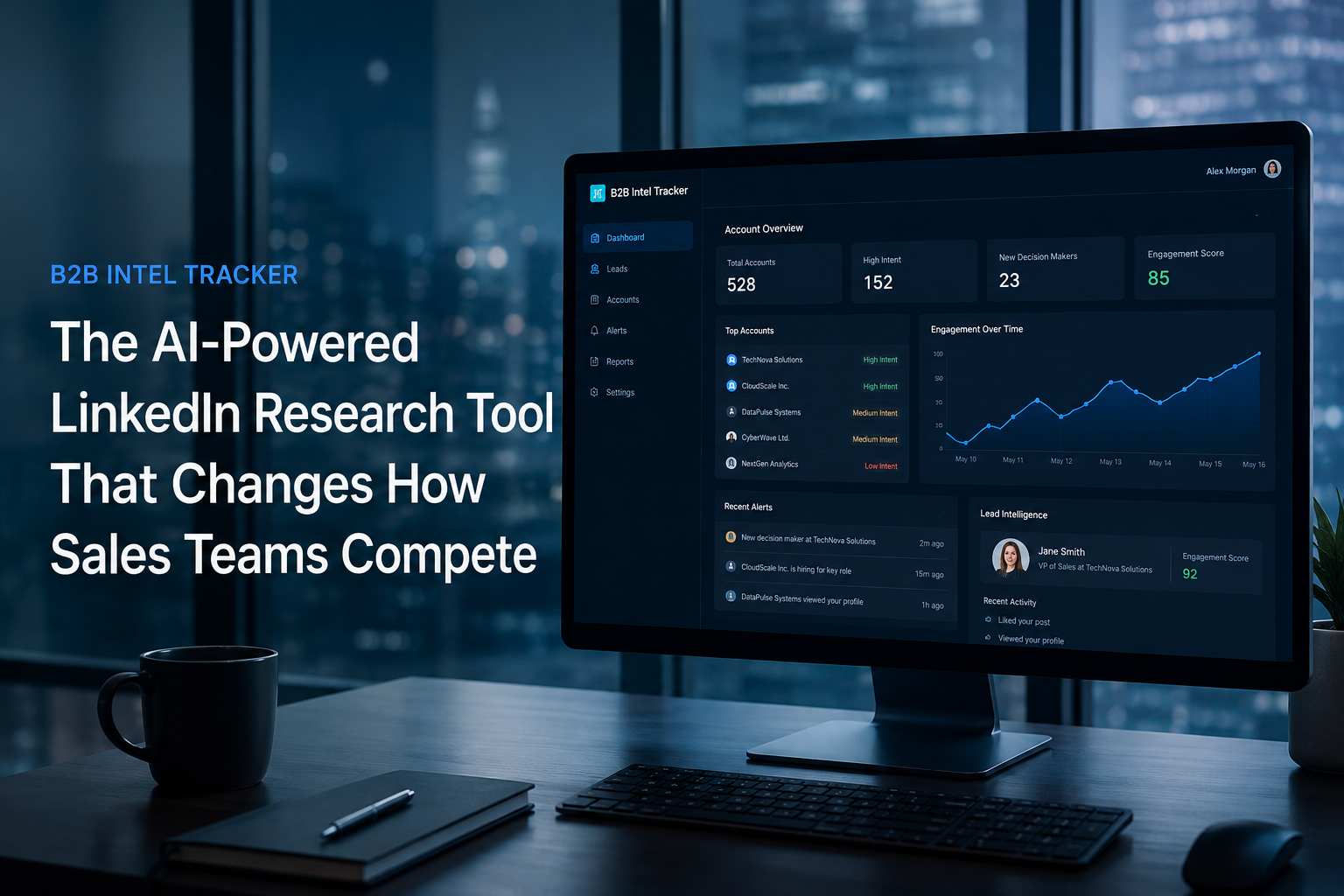
The B2B Intel Tracker is a free, single-file React web app that combines competitor tracking, buyer persona management, Boolean search generation, and AI-powered strategic reports in one dark-mode command center. Built with direct Anthropic API integration, it gives any go-to-market team enterprise-grade LinkedIn intelligence capabilities without subscriptions, backends, or build tools. There is a…
You can collect 100 survey responses without paying for a panel by strategically leveraging free channels including Reddit communities, email lists, SurveySwap, and social media. This guide gives you ten proven strategies, peer-reviewed evidence, real case studies, and a ready-to-execute 7-day action plan. At the end of this article, there is a free interactive survey…
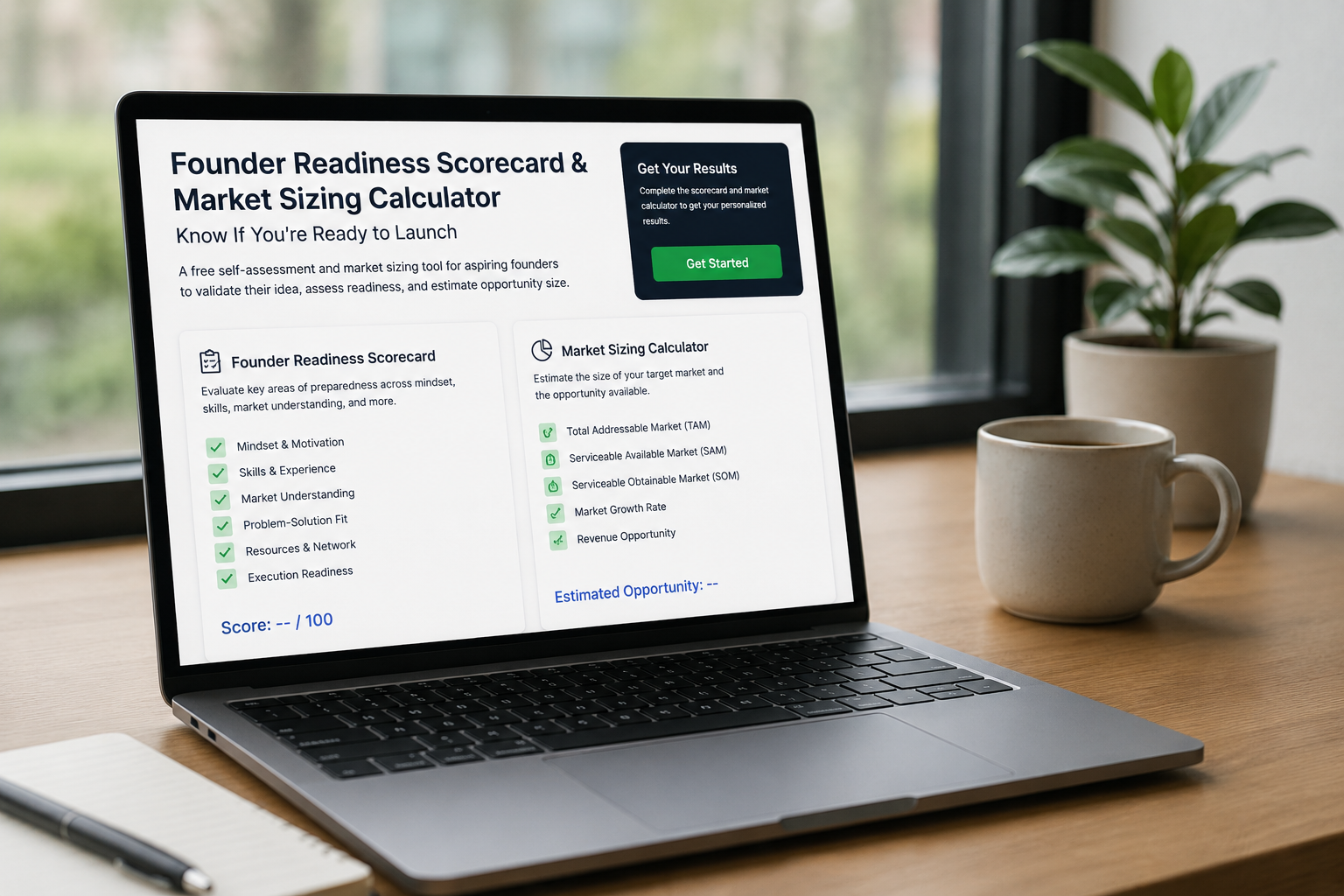
Most founders fail not because their idea was wrong, but because they never honestly assessed their own readiness before committing. This free tool scores you across six founder dimensions and calculates your TAM, SAM, and SOM market opportunity — so you can launch with clarity, not hope. Are You Ready to Start a Business?…
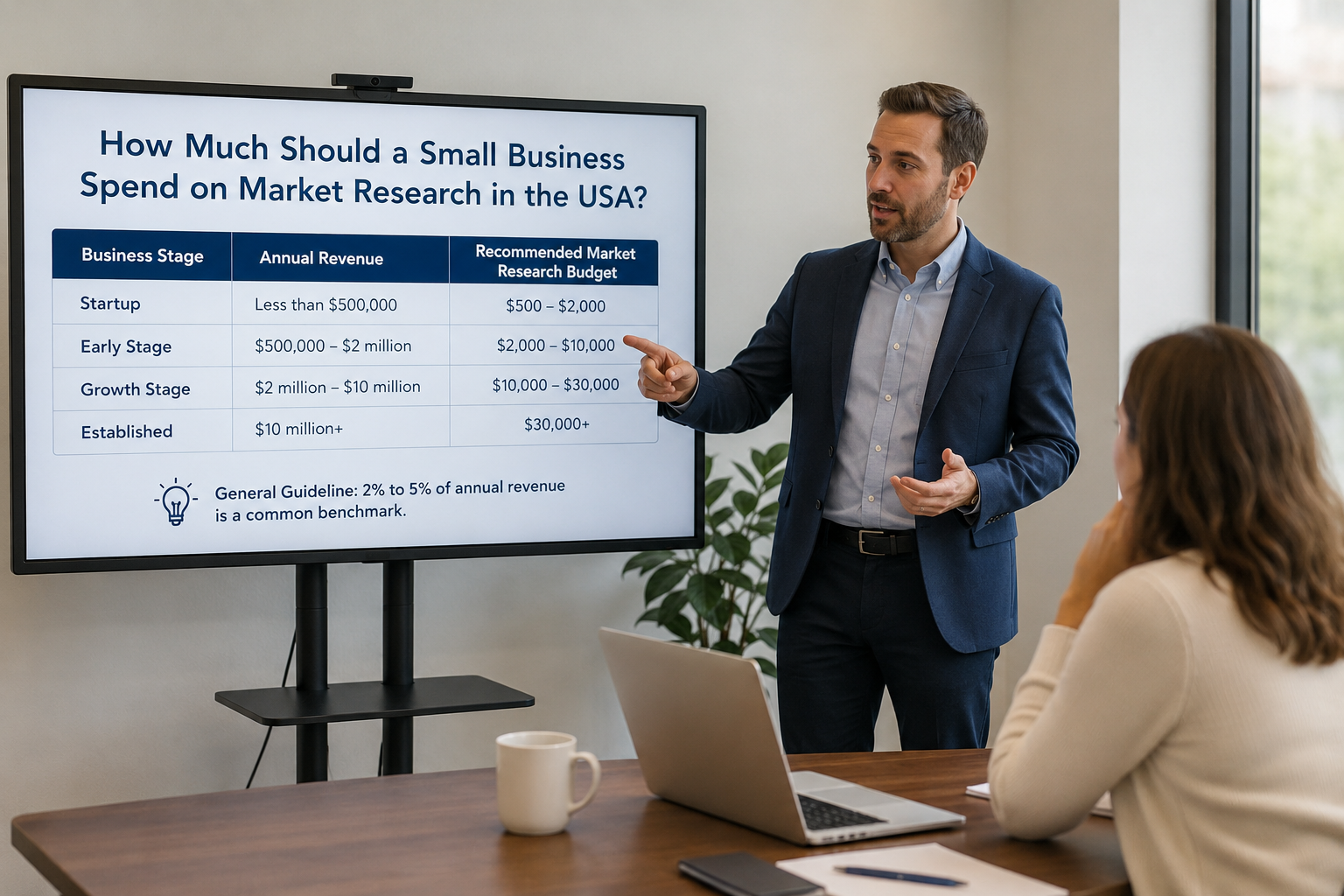
Small businesses in the USA should allocate 10–15% of their marketing budget to market research, which — based on the SBA’s recommended 7–8% of gross revenue for marketing — translates to roughly 0.7–1.2% of annual revenue. This guide breaks down exactly what that means in real dollars at every business stage, what the research should…
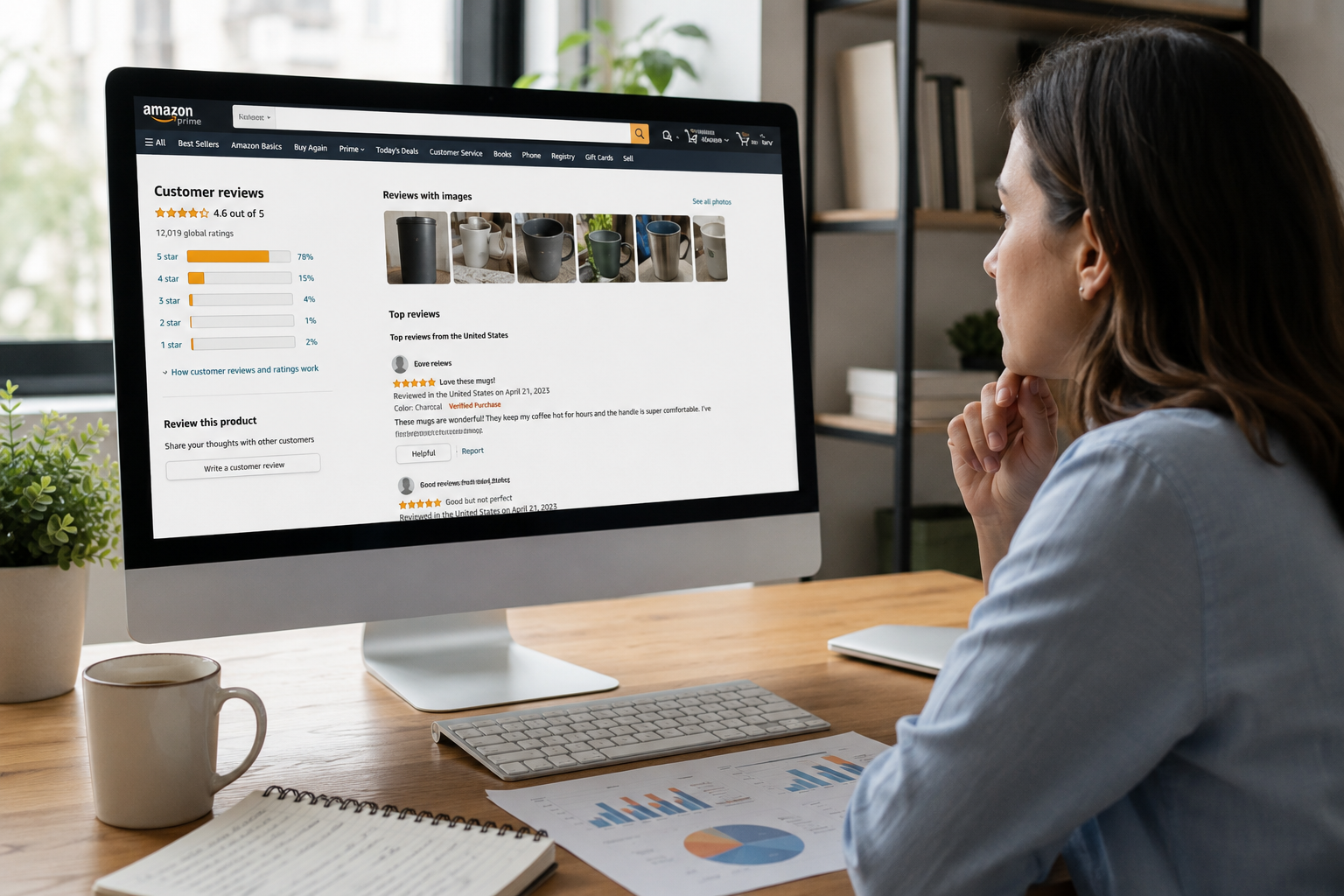
Amazon reviews are a free, real-time intelligence database that shows you exactly how to use Amazon reviews as a market research tool — revealing market gaps, customer pain points, and competitive weaknesses hiding in plain sight. Master this approach and you will know how to use Amazon reviews as a market research tool to validate…
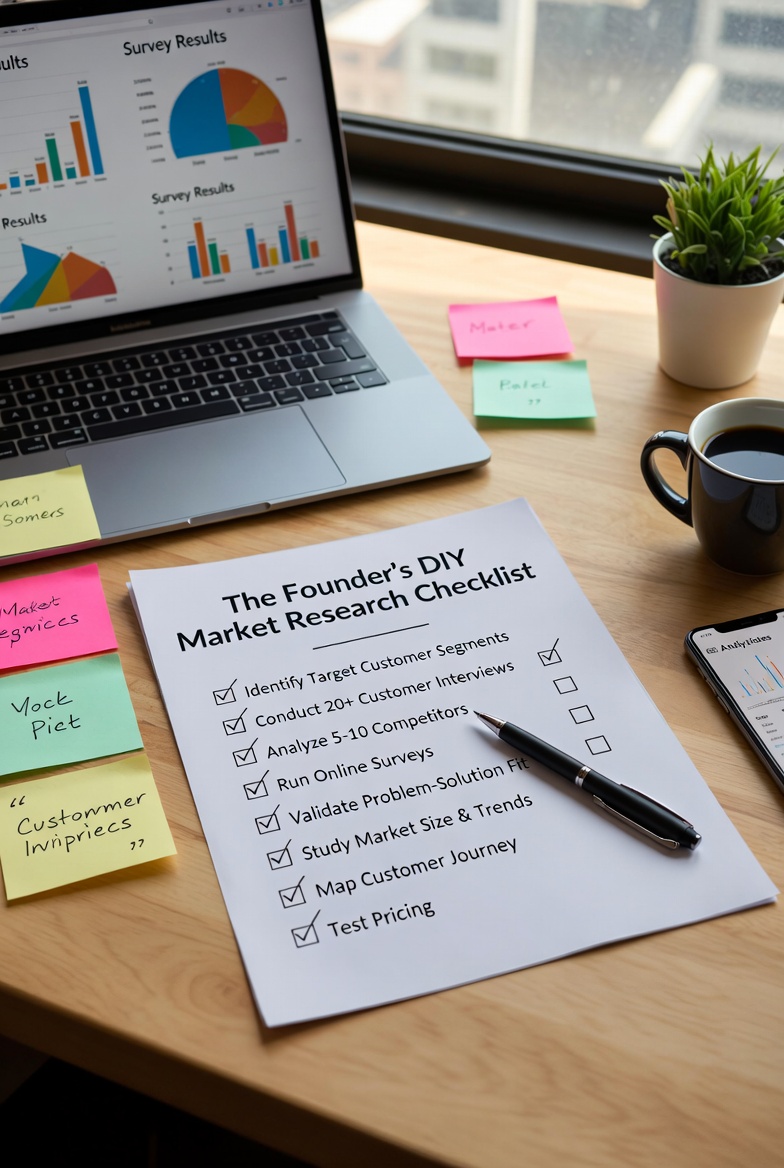
The Founder’s DIY Market Research Checklist is a 12-step action framework that walks you through every critical validation exercise — from pinpointing your customer’s exact problem and sizing your market with TAM/SAM/SOM, to running discovery interviews, testing willingness to pay, and mapping your go-to-market channels. Complete every item before you build and you replace expensive…
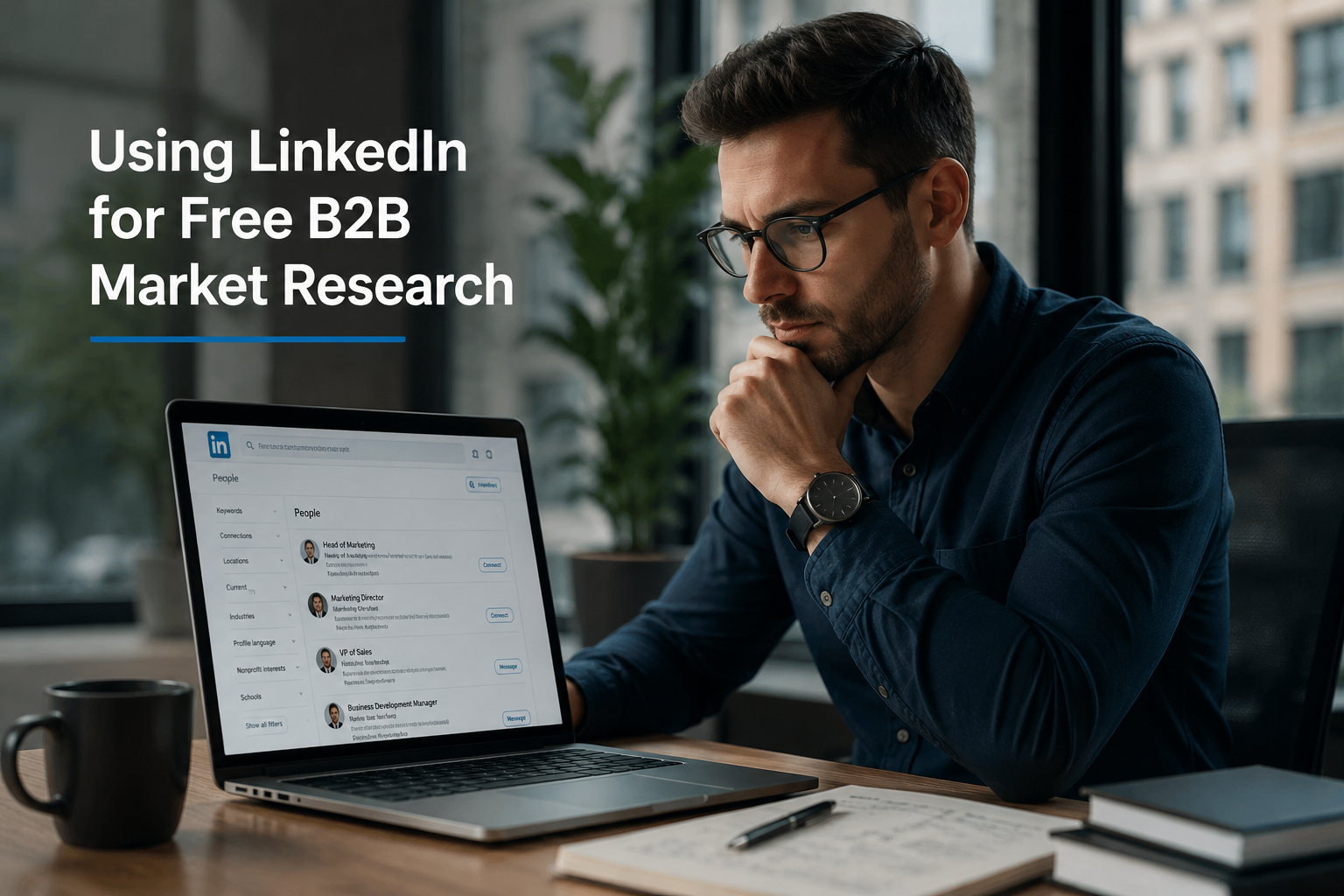
Using LinkedIn for free B2B market research gives you direct access to competitor strategies, buyer priorities, and live market trends — all from the world’s largest professional network, at zero cost. This guide shows you exactly how to turn LinkedIn’s free tools into a fully operational market intelligence system that delivers insights your competitors are…
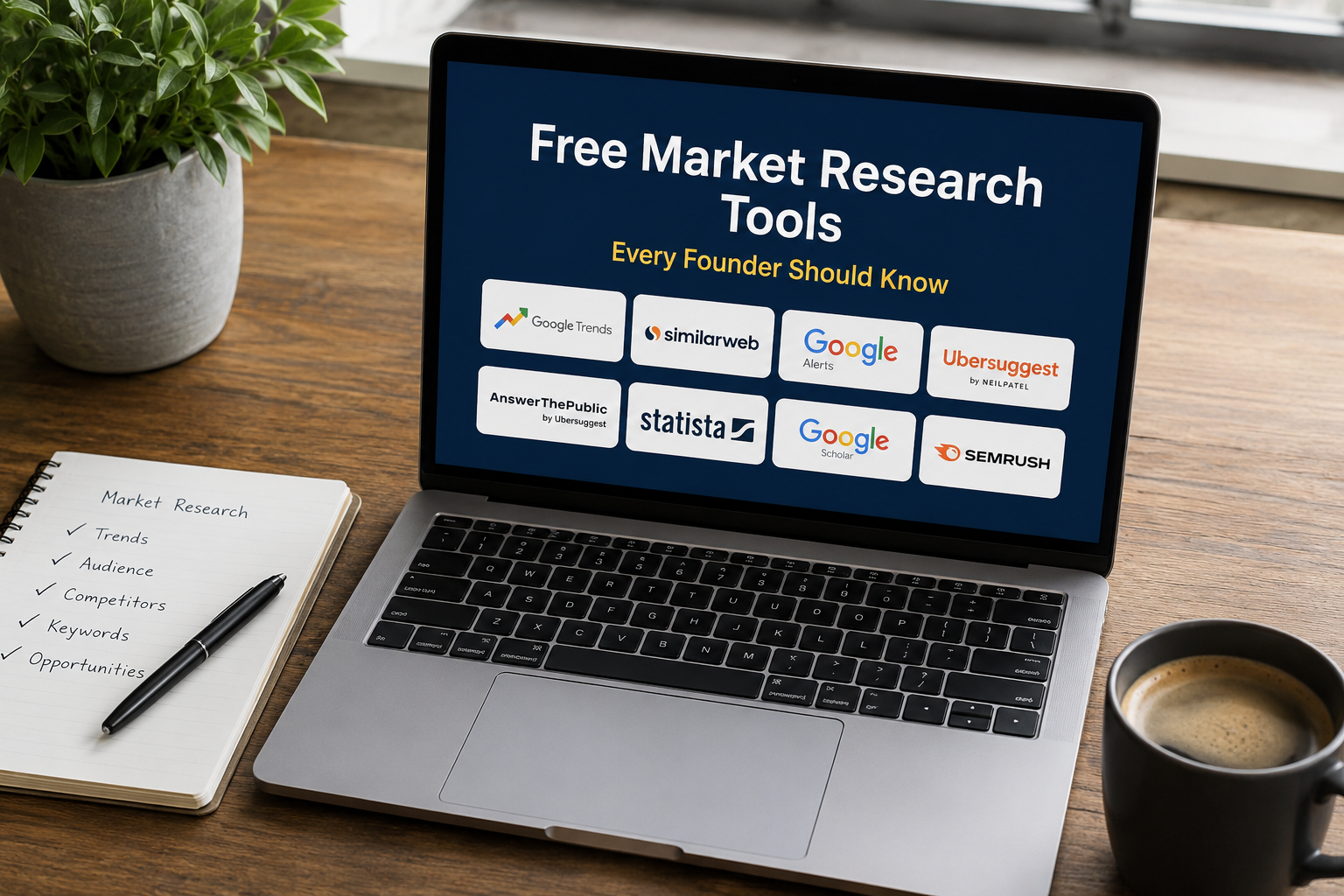
Free market research tools every founder should know include Google Trends, Google Keyword Planner, Answer The Public, Reddit, SurveyMonkey, Statista, Think With Google, LinkedIn, Ahrefs Webmaster Tools, Google Alerts, ONS government data, and Typeform. These twelve tools cover everything from demand validation and competitor intelligence to market sizing and customer research — all at zero…

To eliminate confirmation bias in startup market research, you must deliberately design your research to disprove your idea rather than confirm it — using falsification frameworks, designated sceptics, disconfirmation logs, and behavioural tests like fake door pages that measure what people actually do instead of what they politely say. The seven-step framework in this article…
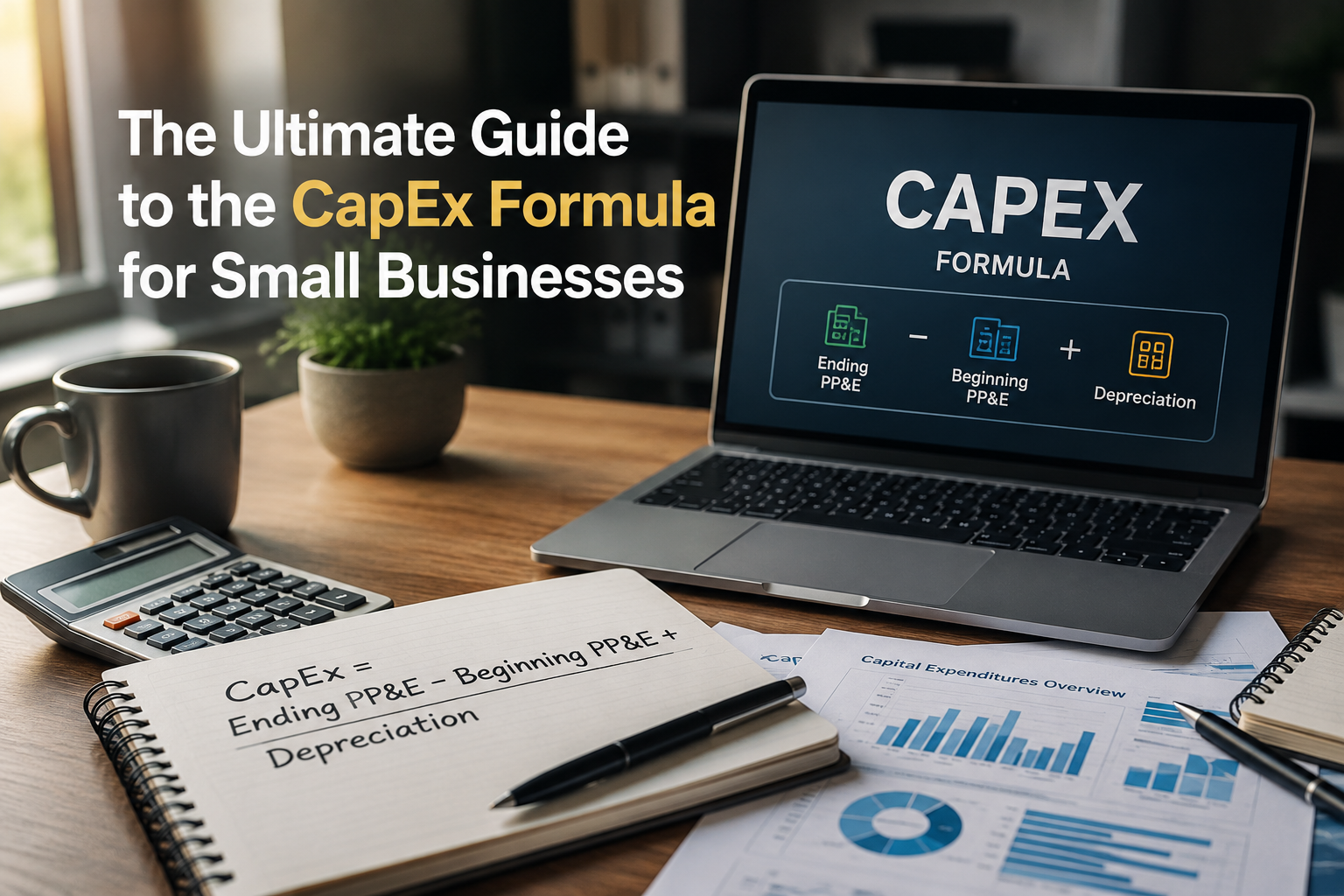
The CapEx (Capital Expenditure) formula — Ending Net PP&E (Property, Plant & Equipment) minus Beginning Net PP&E plus Depreciation — tells small business owners exactly how much they invested in long-term assets during any given period. Master this calculation and you gain the single most important tool for protecting your cash flow, timing asset purchases…